
Pre-production
Design and material reviewed for texture and look. Procedures and benchmarks written before the line starts.
Home / What we do / Quality
Garments, jute, and leather are all meant to leave the factory matching the approved sample. The profile is specific about how.
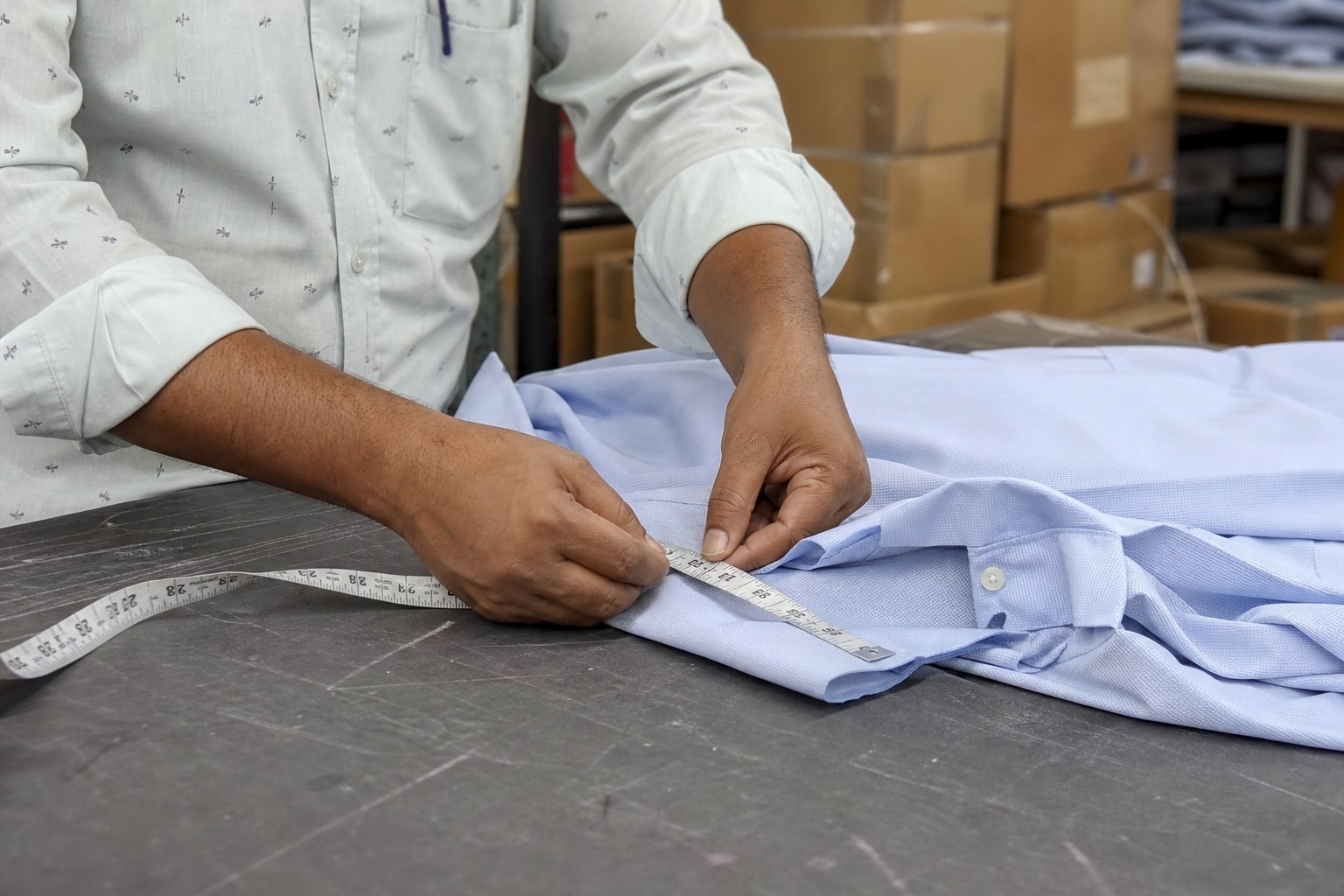
Risk is reduced by keeping the file in one pair of hands: a factory that was chosen for the product, an inspection while the line is running, and a shipment that is not released on a promise.
Design and material reviewed for texture and look. Procedures and benchmarks written before the line starts.
Colour, construction, and inputs checked against the pre-production sample and the technical file.
Defects caught while they can still be corrected. Prints, cutting, and measurements watched on the line.
A share of packed goods checked for labelling and for the brand’s finished standard.
Carton count, size, weight, and shipping marks confirmed before transit.
Final inspection uses an Acceptable Quality Limit. The profile names AQL 1.5 / 2.5. Publish the level agreed on the purchase order, not a stricter number than the contract.
A pre-qualified network, split between factories suited to volume apparel and factories suited to leather or to jute craft. A knit programme and a leather programme should not be forced through the same floor.
The profile prioritises LEED-certified garment factories, using Bangladesh’s concentration of green-certified plants. Say “prioritise”, not “every factory is LEED”.
Supply can be mapped from cut-and-sew back toward yarn and raw material where an international buyer requires that tier. Do not claim a full map on every style.
Local presence is the point: quality and timing watched on site, so a fade in quality is seen before the container is sealed. Heavier jute and leather shipments are also planned for fuller containers and more efficient routes.
A useful quotation starts from a specification, a target price, and a shipment window.